When to Aerate and Overseed a Hamptons Lawn: The Fall Timing Window
Aerate and overseed a South Fork lawn when soil temperature sits between 50 and 65 degrees, and finish seeding at least 45 days before your first frost. On the East End, the window opens in late August and closes through late September into early October, depending on the year.
Soil temperature decides the date, not the calendar. Air temperature drops first. Soil holds heat for weeks afterward, which is why seed sown during a warm early September week germinates faster than seed sown on the same date in a cool year.
Why fall beats spring on the East End
Cool-season grasses run two growth peaks, one in spring and one in fall. Fall seeding lands ahead of the stronger root-building period, with warm soil, cooler nights, and reliable moisture.
Spring seeding competes with crabgrass germination and runs straight into summer heat before roots reach depth. Fall seedlings enter winter established and hold the lawn through the following August.
Coastal properties in Southampton, Sagaponack, and Amagansett gain a second advantage. Surrounding water moderates fall temperatures, so the seeding window stretches later here than across inland Suffolk.
Read the soil temperature before you order seed
Take a reading four inches deep, mid-morning, three days running. A stable average in the 50 to 65 degree range means go.
Check your local frost timing through NOAA climate normals, and follow current conditions through the National Weather Service office covering Long Island. Count back 45 days from the average first frost. Seed after the halfway point of the count and you gamble on a warm November.
Core aeration comes first
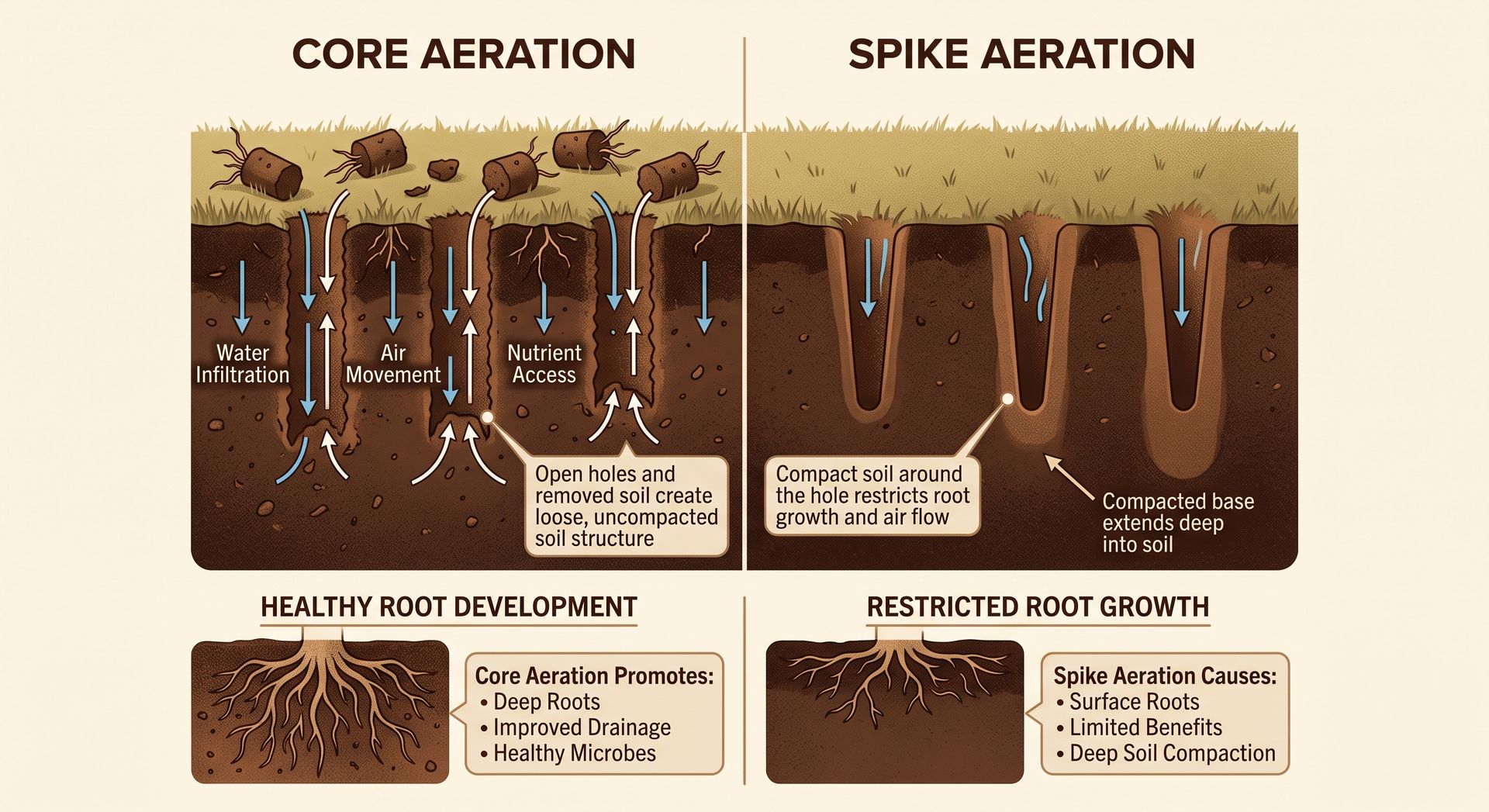
Core aeration pulls plugs of soil and thatch from the lawn, leaving open channels for seed, water, air, and nutrients. Spike aeration presses holes instead of removing material, which compacts the surrounding soil further.
Ask for core aeration. On heavy-traffic properties with pool areas, event lawns, and construction history, two passes in opposite directions give better coverage than one.
Sandy South Fork soils compact less than clay, and estate lawns still compact under mowers, foot traffic, and party tents. Penn State Extension turfgrass guidance and UConn Extension both cover the agronomy behind the practice for the Northeast.
Seed selection for coastal properties
Three grass types carry most Hamptons lawns:
- Turf-type tall fescue. Deep roots, drought tolerance, good wear resistance. The workhorse for large open lawns.
- Perennial ryegrass. Fast germination, strong color, good repair speed. Blends well as a nurse grass.
- Fine fescue. Shade tolerance under mature oaks, low fertility needs, salt tolerance near the water.
Blends outperform single species on properties with sun, shade, wind exposure, and irrigation variation across one parcel. Our lawn services match blends to each zone rather than seeding one mix across an entire estate.
Shade changes the whole plan
Turf under a mature canopy competes for light, water, and root space. Overseeding a dense shade area with sun-type grass wastes the seed.
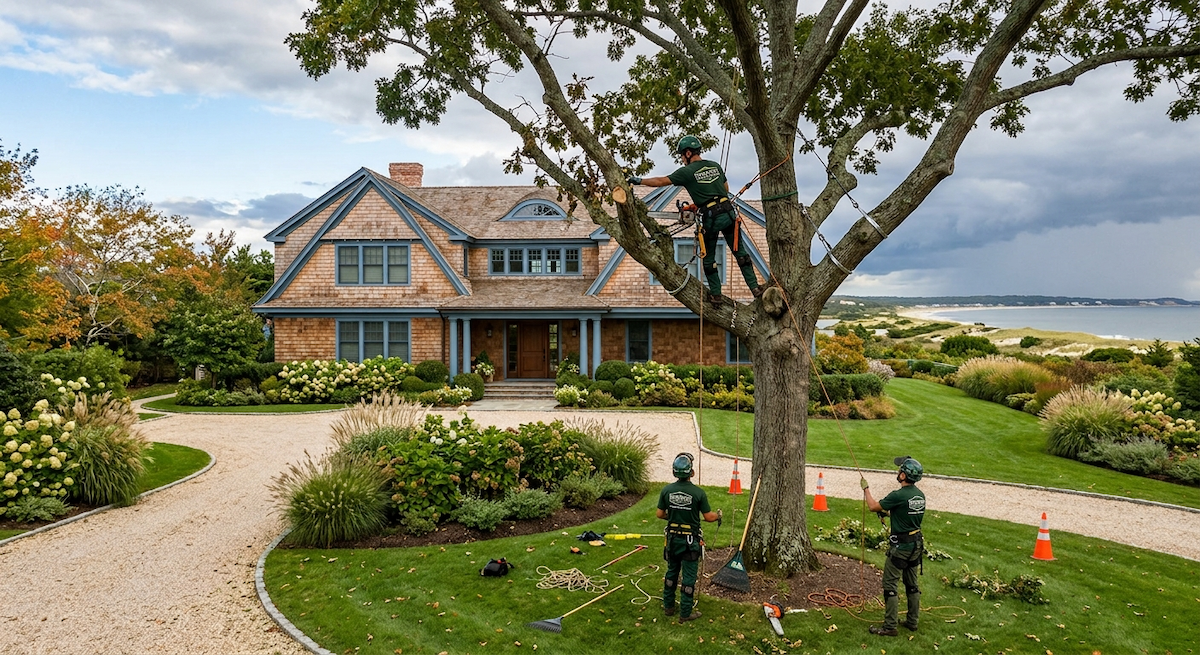
Two fixes work. Selective canopy thinning raises light levels at ground level, and our tree service crew handles the pruning without stressing the tree. Where light stays low, replace turf with shade planting or a mulch bed. Fighting a mature beech for five years costs more than the redesign.
The first three weeks after seeding
Germination fails on watering mistakes more often than on seed quality.
- Days 1 to 14. Light watering two or three times daily. Keep the top half inch damp with no puddling.
- Days 15 to 28. Reduce frequency, increase depth. Roots follow water downward.
- Day 28 onward. Standard deep watering two or three times weekly.
Smart irrigation controllers handle this schedule shift automatically. The EPA WaterSense program lists controllers and sprinkler bodies verified for efficiency, which matters on properties drawing from a sole source aquifer.
Hold mowing until new grass reaches three and a half inches. Then cut no more than one third of the blade height. Keep heavy traffic off the area for a full month.
Fertility and soil testing
Test before you fertilize. A soil test returns pH, organic matter, and nutrient levels, and Long Island lawns often sit acidic enough to lock up nutrients already present in the soil.
Apply a starter fertilizer at seeding, then a second feeding four to six weeks later. Suffolk County regulates fertilizer application dates, so the fall calendar has a hard end. Schedule the second feeding before the cutoff rather than after.
What a renovation costs you in time
A full renovation runs three weeks of restricted use. Book the work for late August or early September and your lawn recovers before the fall entertaining season. Book in October and you carry bare patches through winter.
Seasonal residents should schedule before Labor Day departure. We complete the aeration, seeding, and the first three weeks of irrigation management while the property sits empty. See finished renovations in our gallery and our project archive.
Service area
We handle lawn renovation across Southampton, Remsenburg, Aquebogue, East Hampton, Hampton Bays, Sag Harbor, East Quogue, Amagansett, Bridgehampton, and Sagaponack. Call or message Hector at (631) 960-8242, or request a walkthrough.
Frequently Asked Questions
When should I overseed a lawn on the South Fork?
Between late August and early October, once soil temperature holds between 50 and 65 degrees and at least 45 days remain before your average first frost. Coastal properties hold the window later than inland sites.
Is spring overseeding worth doing?
Rarely. Spring seedlings compete with crabgrass and hit summer heat with shallow roots. Fall seeding produces a denser lawn with less input.
What is the difference between core aeration and spike aeration?
Core aeration removes plugs of soil and thatch, opening real channels for seed and water. Spike aeration presses holes and compacts the soil around each hole. Ask for core aeration.
How often should I water new grass seed?
Two or three light waterings daily for the first two weeks, then fewer and deeper waterings through week four. Keep the top half inch damp during germination without creating puddles.
Which grass seed works best near the ocean?
A blend. Turf-type tall fescue for drought and wear, fine fescue for shade and salt tolerance, perennial ryegrass for fast cover. Single-species lawns struggle across the sun, shade, and wind variation on one estate parcel.
How long before I mow after overseeding?
Wait until new grass reaches three and a half inches, usually three to four weeks. Remove no more than one third of the blade height on the first cut.
Do I need a soil test first?
Yes. Long Island lawns often run acidic, which locks up nutrients already in the soil. A test costs little and prevents a season of fertilizer with no visible result.
Articles