Deer-Resistant Planting for Hamptons Properties: What Survives on the East End
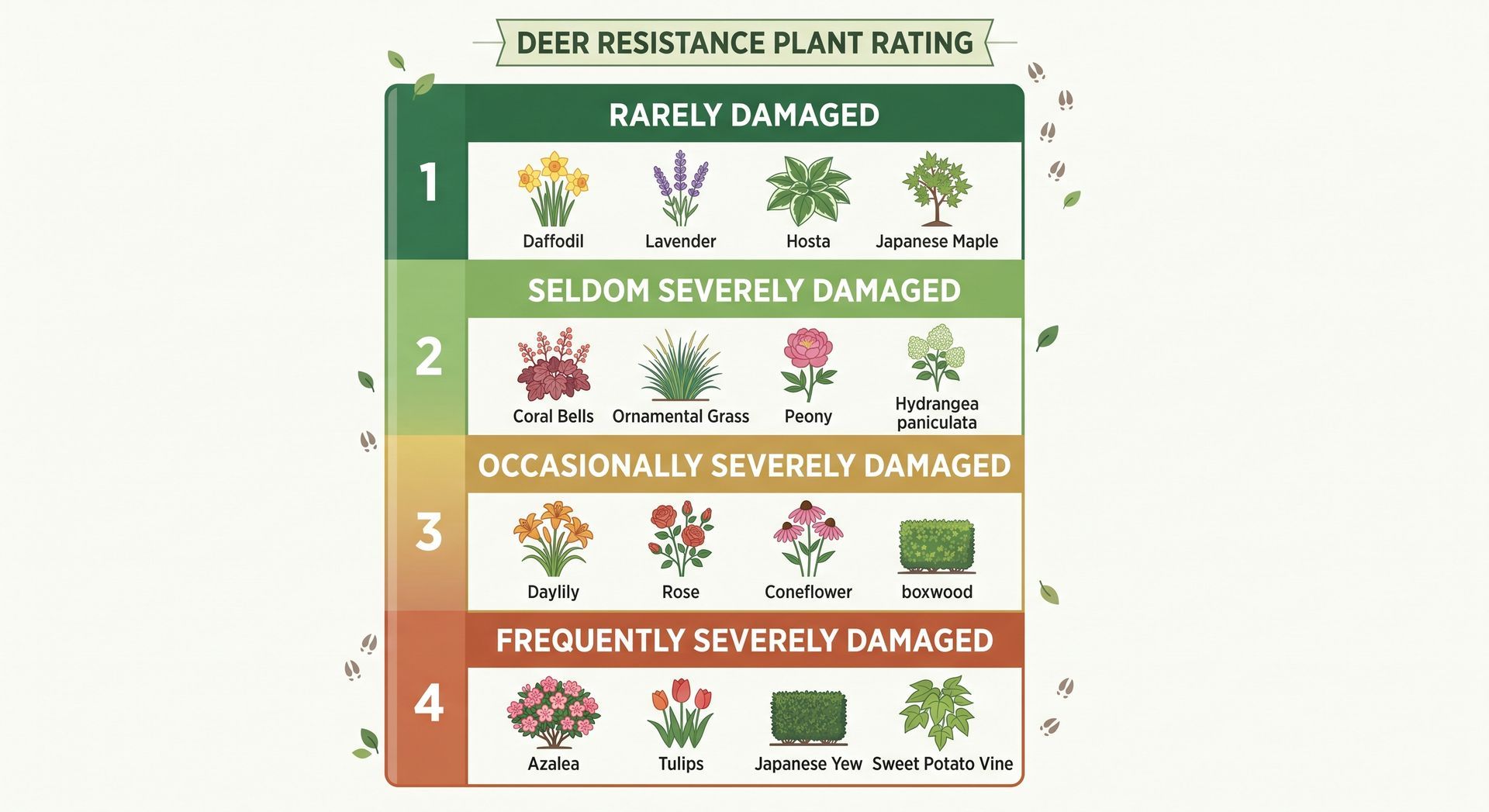
No plant is deer proof. Rutgers Cooperative Extension rates hundreds of garden plants across four levels of deer damage, from Rarely Damaged to Frequently Severely Damaged. Planting from the first two categories is the difference between a garden bed and a salad bar.
Suffolk County holds an estimated 25,000 to 36,000 deer, with the densest populations on the eastern end of the county. Your property in Southampton, Bridgehampton, or Sagaponack sits inside the heaviest browse pressure in the region.
Why East End deer pressure keeps rising
Three conditions stack up on the South Fork. Large parcels with mature woodland edges give deer cover. Hunting access is limited across residential districts. Irrigated ornamental beds provide food through dry stretches when wild forage thins out.
The result shows up every spring. Hostas disappear overnight. Arborvitae hedges go bare from the ground to five feet. Tulip buds vanish two days before opening.
The four-category rating system
Rutgers built its plant damage ratings with input from nursery professionals, extension staff, and master gardeners in heavy deer country. The four ratings work as a planting filter:
- Rarely Damaged. Safe choices for open beds with no protection.
- Seldom Severely Damaged. Reliable in most seasons, with occasional browsing in hard winters.
- Occasionally Severely Damaged. Needs fencing or a repellent program.
- Frequently Severely Damaged. Deer favorites. Plant these inside a fenced garden or skip them.
We build plant lists for Hamptons properties from the first two categories, then place anything from the third category inside fenced areas near the house.
Plants deer rarely touch on the South Fork
These perform well in local soils and salt-influenced air:
- Boxwood. The backbone of formal Hamptons hedging. Deer leave established plantings alone.
- Russian sage, lavender, catmint. Aromatic foliage. Silver texture reads well against gray shingle.
- Ornamental grasses. Switchgrass, little bluestem, and miscanthus hold structure through winter.
- Ferns. Reliable under mature oak canopy.
- Daffodils and allium. Spring color with no browsing loss.
- Bayberry and juniper. Native tolerance for wind, sand, and salt spray.
- Pieris and spirea. Flowering shrubs with low browse pressure.
Plants deer target first
- Hosta
- Tulip
- Arborvitae and yew
- Rhododendron and azalea
- Hydrangea, especially new spring growth
- English ivy in winter
Hydrangea sits at the center of the Hamptons look, so removing the plant from a design rarely satisfies a homeowner. The workable answer is placement. Hydrangea inside a fenced courtyard or against a foundation with a repellent rotation performs. Hydrangea along an open property line feeds deer.
Layered defense beats any single tactic
Plant selection carries roughly half the load. The rest comes from three additions.
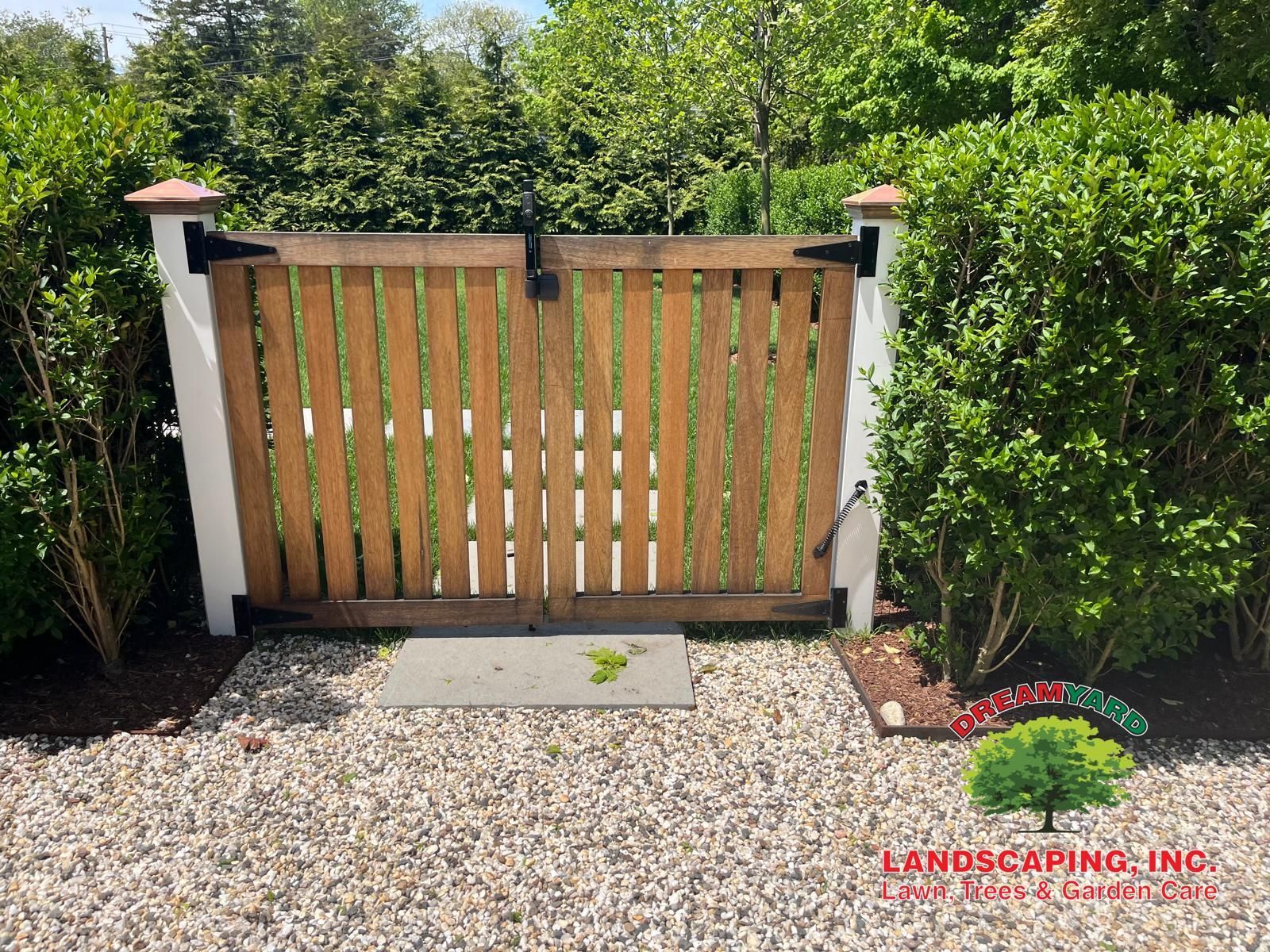
Fencing. Deer clear low barriers with ease. An eight-foot fence around a cutting garden or vegetable plot works where a four-foot fence fails. Our fencing work covers estate perimeters, garden enclosures, and pool surrounds under one service agreement.
Repellent rotation. Deer adapt to a single product within a season. Alternating two or three formulations on a monthly schedule keeps results steady. Reapply after heavy rain.
Physical protection through winter. Burlap wraps and cages protect young evergreens during the months when wild forage disappears. January and February bring the heaviest browsing of the year.
Deer, ticks, and a public health problem
Deer carry the adult stage of the blacklegged tick. Rising deer numbers across eastern Long Island have tracked alongside rising tick populations and the diseases they transmit. The CDC publishes prevention guidance for Lyme disease, and much of the advice touches property design directly.
Three design moves reduce tick habitat near the house:
- Keep a three-foot gravel or mulch border between lawn and woodland edge
- Hold turf height low in high-traffic zones
- Move play areas and seating away from shaded leaf litter
Native plantings hold up under browse and drought
Species native to coastal New York evolved alongside local deer and local weather. Bayberry, beach plum, inkberry, switchgrass, and little bluestem tolerate sandy soil, wind, and dry August stretches without constant irrigation.
The Audubon native plants database and the National Wildlife Federation native plant guidance both filter by ZIP code, so you see species suited to Suffolk County rather than generic regional lists. Cornell's gardening resources add growing detail for New York conditions.
How we plan around deer on estate properties
Our design process starts with a browse survey. We walk the property and record what deer have taken and what they have left alone. Existing damage tells us more than any regional list, since browse pressure shifts block by block.
From there we set three zones. Open perimeter beds get Rarely Damaged species only. Mid-property beds get Seldom Severely Damaged species with a repellent schedule. Protected areas near the house carry the hydrangeas, roses, and specimen plants a homeowner wants at close range.
See finished examples in our project gallery and our recent work.
Service area
Dream Yard Landscaping designs and maintains grounds in Southampton, Remsenburg, Aquebogue, East Hampton, Hampton Bays, Sag Harbor, East Quogue, Amagansett, Bridgehampton, and Sagaponack. Learn about our team or call Hector at (631) 960-8242.
Frequently Asked Questions
What is the most deer-resistant hedge for a Hamptons property?
Boxwood. Deer leave established boxwood alone in almost all conditions, and the plant suits the formal look common across Southampton and Bridgehampton estates. Avoid arborvitae and yew, which deer strip to the branch.
Do deer repellents work?
Yes, with rotation. Deer adjust to a single product within one season. Alternating two or three formulations monthly, and reapplying after heavy rain, keeps pressure down.
How tall does a deer fence need to be?
Eight feet. Deer clear lower barriers with ease, especially on flat ground. Slope, plantings, and double fencing change the math, so a site walk gives a firm answer for your property.
Are hydrangeas still worth planting in the Hamptons?
Yes, with placement discipline. Hydrangea inside a fenced courtyard, near a foundation, or under a repellent rotation performs well. Hydrangea along an open property line becomes a feeding station.
When is deer damage worst?
January and February. Wild forage runs out, and deer turn to evergreens and ornamental shrubs. Protection installed in November prevents the loss.
Do native plants resist deer better?
Some do. Bayberry, inkberry, switchgrass, and little bluestem hold up well and handle coastal wind and sandy soil. Native status alone is no guarantee, since deer browse plenty of native species.
Does Dream Yard install deer fencing?
Yes. We handle estate perimeter fencing, garden enclosures, and pool surrounds, and we coordinate fencing with the planting plan so the two work together instead of separately.
Articles